

PRESSE・PRESS
ALBUMS
🗞️ Vous trouverez ci-dessous de larges extraits (pour contextualiser) de comptes rendus d’albums illustrant l’accueil critique réservé aux réalisations de Rachel Laurin en tant que compositrice et organiste. 🔠 Ces extraits sont présentés dans leur langue originale.
🗞️ Below are extensive excerpts (to contextualize) from album reviews illustrating the critical reception of Rachel Laurin’s work as a composer and organist. 🔠 These excerpts are presented in their original language.
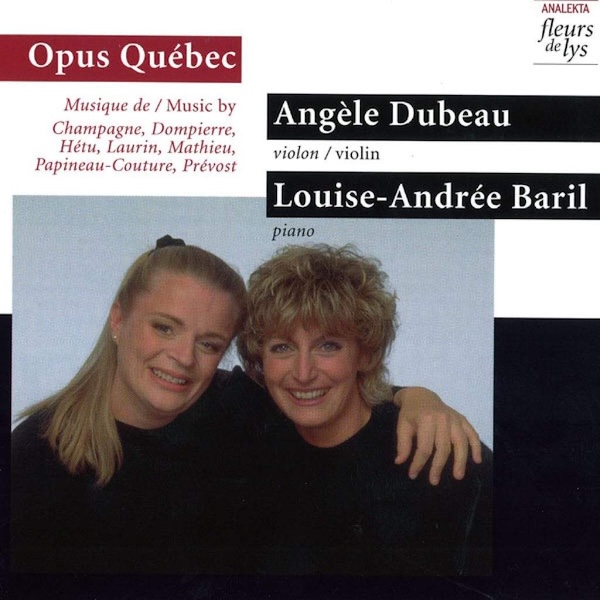
OPUS QUÉBEC・Analekta
Rachel Laurin’s four-movement Violin Sonata in A Minor returns the recital to turn-of-the-century Paris with rhapsodic tunes, richly if conservatively harmonized. (…) this is an accomplished score.
The Gazette (Montréal), 18 February 1995
OPUS QUÉBEC・Analekta
This collection of pieces for violin and piano (two for solo violin) by seven Quebec composers offers many pleasant discoveries to the musical explorer. (…) The Prevost and Hetu pieces — both for unaccompanied violin — are cut from sterner cloth, but finely tailored nonetheless, while Rachel Laurin (born in 1961), by far the youngest composer here, writes in the most old-fashioned style. Her sonata’s “in A minor” designation is no mere decoration: this is an expansive, richly tonal, and warmly romantic piece whose flowing arpeggios and wide-spanned melodic arches would have surely found favor with Cesar Franck. Dubeau and Baril play everything beautifully and con amore, and sound (as on all Analekta discs I’ve heard) is clear, strong, and natural.
American Record Guide (USA), July/August 1995
OPUS QUÉBEC・Analekta
(…) François Dompierre’s Diableries is a set of three demonic little pieces in three indescribable distinct styles, and Rachel Laurin’s Sonata is a traditional-sounding formal piece with tight counterpoint, nice harmonies, and lyrical lines. The playing is superb in every way, and the recording, thank goodness, sounds natural.
American Record Guide (USA), November/December 2000
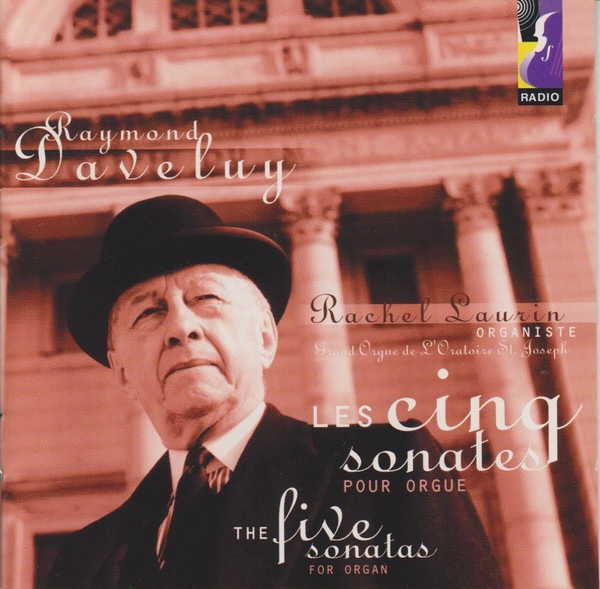
DAVELUY : CINQ SONATES POUR ORGUE・CBC Records/Les Disques SRC
(…) c’est la marque canadienne Les Disques SRC/CBC Records qui prend l’initiative d’un enregistrement réunissant les cinq Sonates que Raymond Daveluy, titulaire de l’orgue de l’Oratoire depuis plus de 35 ans, a composées pour son instrument. Les cinq Sonates complètes, doit-on préciser. Une sixième est en préparation, avec un premier mouvement terminé et créé l’été dernier par l’auteur aux récitals du mercredi soir de l’Oratoire. Occupé à ce sixième opus et, par ailleurs, n’ayant pas joué les cinq Sonates depuis un certain temps, M. Daveluy a préféré en laisser l’enregistrement à sa disciple Rachel Laurin. (…) L’intégrale des Sonates pour orgue de Raymond Daveluy — disons plutôt «Intégrale, volume 1» puisqu’il reste à venir une autre sonate, peut-être même davantage — est une magistrale réussite, et ce à tous égards. Car il y a la musique et il y a la façon de la transmettre.
(…) Conçue principalement sur un instrument de tradition germanique, la musique pour orgue de Daveluy s’inscrit nettement dans cette esthétique : elle est massive, sévère même, elle s’exprime avec facilité dans le langage fugué, comme chez Bach, et reprend, en les transformant, les procédés harmoniques propres à Hindemith. Et Rachel Laurin possède toutes les qualités requises pour la bien traduire : la technique puissante et libre de toute contrainte, l’imagination dans la registration, l’envergure de musicienne et d’interprète. De plus, étant elle-même compositrice, elle montre une totale compréhension de la construction même de cette musique très écrite et souvent fort complexe. Elle a d’ailleurs signé les excellents commentaires accompagnant le coffret.
Dans cette réussite, il faut aussi compter le travail du réalisateur, Jacques Boucher. Lui-même organiste, Boucher a résolu tous les problèmes que posait l’acoustique très réverbérée de l’Oratoire et redonné au Beckerath sa sonorité naturelle, tant dans la puissance que dans le détail et la couleur. D’une certaine façon, il a servi la pensée de Raymond Daveluy aussi bien que l’interprète elle-même.
La Presse (Montréal), 1 février 1997
DAVELUY: FIVE ORGAN SONATAS・CBC Records/Les Disques SRC
Although Raymond Daveluy probably has been more famous over the years as a virtuoso organist and improviser than a composer, he has produced one of the most substantial bodies of organ music of any Canadian composer since Healey Willan, including large-scale sonatas brought together on this disc. Rachel Laurin, no mean organist herself (and one of the Montréal master’s pupils), has wisely gone to Daveluy’s own instrument, the Rudolf von Beckerath organ of St. Joseph’s Oratory, to record them. Here is a case of the music and the instrument seeming to belong to each other.
The Toronto Star (Toronto), 5 July 1997
DAVELUY: FIVE ORGAN SONATAS・CBC Records/Les Disques SRC
Daveluy’s organ sonatas come from two different periods in his life, the first three from 1955–1960; his last two from 1984–1993. The style most easily recalled from the past comparison is Hindemith’s — except that Daveluy’s are more appealing. Simply put, his music is characterized by a fondness for open (without third) chords; a hard-edged sonority; distinct thematic shape and direction, and a strong affinity for classical processes — imitation, fugue, thematic superimposition. Only two movements hint at what one might call French romanticism: the Largo of Sonata 2 and the Adagio of Sonata 5, where a somewhat Vierne-like quality prevails, with an undulating reed over a homophonic supporting texture.
(…) I think the best movements — with melodic interest and clearly discernable form — would be the concluding Fugue of Sonata 4 and the Finale of Sonata 5. Both are powerful and well-shaped works. The imitative writing is exceptional in its clarity and drive.
There is a certain rightness about these pieces. They lie well for the instrument (…) and Mme Laurin does herself and the composer proud in her magisterial interpretations. (…) These pieces should be brought to the attention of today’s young virtuosos. Daveluy wanted to create music that would make contemporary styles more accessible and interesting to today’s listening public. He has succeeded magnificently.
American Record Guide (USA), July/August 1997
BACH TRANSCRIPTIONS POUR ORGUE・Musicus (réédité par Pro Organo)
À la réception de votre disque, j’ai tout de suite écouté, avant toutes les autres, la dernière œuvre enregistrée, car j’ai joué souvent cette Fantaisie chromatique dans mon adaptation pour orgue et j’étais curieux d’entendre la vôtre.
Elle est superbe! J’étais enchanté par la justesse expressive, par la sensibilité, par le sens des couleurs et par ce «maniérisme baroque» dans le vrai sens du terme, qui vous a poussé à reprendre la fin de la Fantaisie comme apothéose de la fugue. Magnifique!
Je vous félicite très sincèrement, également pour votre jeu si clair et si sensible : qualités que j’ai retrouvées ensuite dans les autres œuvres et particulièrement dans les registrations des 2e et 3e mouvements du Concerto aussi bien que dans celles des chorals, registrations presque tactiles, riches, rugueuses et charnelles comme je les aime.
Lettre de Jean Guillou (Paris), Mars 1999
BACH TRANSCRIPTIONS POUR ORGUE・Musicus (réédité par Pro Organo)
Sur le Beckerath de même type, mais deux fois plus gros (78 jeux), de l’Oratoire Saint-Joseph, Rachel Laurin propose un Bach fort différent : des transcriptions de pages instrumentales et vocales du Cantor réalisées en style symphonique par Dupré, Duruflé, E. Power Biggs et elle-même. Laurin justifie son geste en incluant quatre des chorals Schübler qui sont eux-mêmes des adaptations que Bach fit d’autres pièces de lui. Indépendamment de ce qu’on peut penser de tels exercices, il faut bien reconnaître que la jeune organiste est une parfaite virtuose et qu’elle registre avec une grande imagination.
La Presse (Montréal), 2 mai 1999
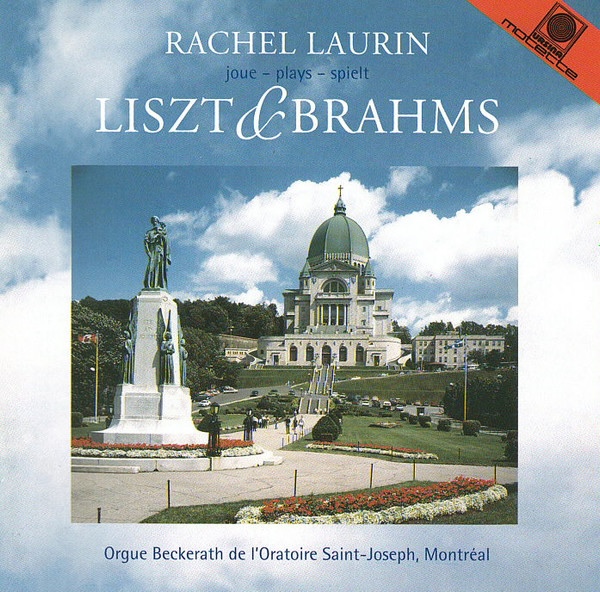
RACHEL LAURIN JOUE LISZT & BRAHMS・Motette
Cette année encore, la consigne est de s’en tenir à cinq choix. Moins grave, ici, d’éliminer quelques candidats sérieux que d’ignorer cette exceptionnelle réussite qu’est le disque de Rachel Laurin jouant au Beckerath de l’Oratoire ses propres transcriptions pour orgue de la Sonate de Liszt et des Variations «Handel» de Brahms. Exécutions d’une prodigieuse virtuosité, avec des registrations extrêmement colorées et parfaitement rendues par le preneur de son Jean de la Durantaye. Rien d’étonnant à ce que la marque allemande Motette ait voulu ajouter ce disque à son catalogue!
La Presse (Montréal), 24 décembre 1999
RACHEL LAURIN JOUE LISZT & BRAHMS・Motette
Hat man die Haas-Orgelfassung von Liszts h-Moll Sonate im Ohr, die respektvoll versucht, ein exzeptionelles Original-Klavierwerk fürs Orgelspiel zu übertragen, was aber vielfach eher kurios anmuten mag, überrascht die 1991 von ihr erstellte und bis 1997 erfeinerte Transkription und (zusammen mit Variationen und Fuge über ein Thema von Händel von Johannes Brahms) im April 1997 mit leichtem aber nicht verschwimmendem Kirchenhall entstandene Aufnahme der 1961 in Kanada geborenen Organistin Rachel Laurin. Sie überrascht einerseits durch die noch orgelgerechtere Registrierung, die allfällig parodistisch oder zirkushaft Assoziierbares minimiert. Und sie überrascht andererseits interpretatorisch, weil Rachel Laurin mit ihrem Orgelspiel suggeriert, hier handle es sich um ein Original-Orgelwerk. Sie lässt Phrasen konsequent bis zum Ende des jeweiligen Nachhalls ausklingen, als wären es spezielle Orgelmusikphrasen und ihr präziser, differenzierter Orgelanschlag (vielfach wird bei Klavieraufnahmen über so manches hinweggespielt, was hier ganz deutlich herausgearbeitet erscheint — das Mitlesen in der Henle-Klaviernotenausgabe offenbart es) schafft es, niemals buchstabierend zu wirken, sondern immer orgelmusikalisch inspirativ. Liszts h-Moll Sonate — als wäre sie ein Orgelwerk!
Capriccio Kulturforum (Hamburg), Mai 2019
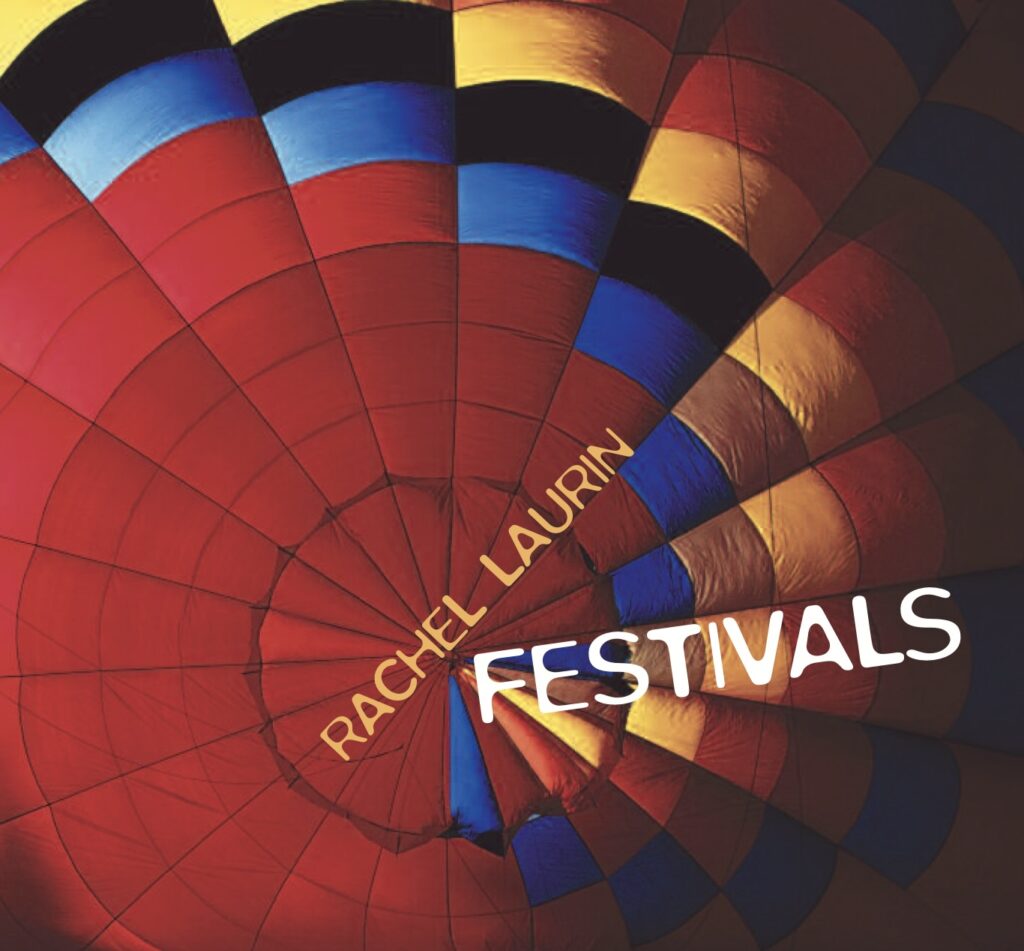
FESTIVALS・Atma Classique
La première réussite du disque est le Trio en mi majeur op. 17 pour flûte, alto et piano, de 1991. Je l’avais entendu deux fois en concert ; il m’a laissé une impression meilleure encore dans la présente réalisation, réunissant d’autres exécutants. Il y a là de jolis thèmes, des élans dramatiques marqués, et l’auteur développe adroitement un motif rythmique qui ressemble étrangement à celui des Ruines d’Athènes de Beethoven. L’exécution est de tout premier plan : Michel Bellavance à la flûte, Véronique Potvin à l’alto et Marc Bourdeau au piano.
On a donné au disque le titre de la première œuvre entendue : Festivals. Il s’agit d’une suite de six pièces où Rachel Laurin, fière Québécoise, s’inspire de quelques-unes de nos manifestations populaires : Festival de jazz de Montréal (avec syncopes et glissements d’archet), Montgolfières, Folklore de Drummondville, etc. Avec Bourdeau au piano, Anne Robert s’affirme encore une fois habile technicienne du violon et interprète imaginative.
(…) La Sonate pour flûte et piano, avec Bellavance et Bourdeau déjà nommés, et écrite pour eux, est égale à bien d’autres œuvres du répertoire international pour cette combinaison d’instruments ; on comprend qu’elle ait été jouée aux États-Unis, en Europe, en Amérique du Sud et en Asie. Il y a là des échos de Jacques Ibert ; il y a surtout de bonnes idées, une forte partie de piano et une longue cadence pour la flûte seule.
La Presse (Montréal), 15 avril 2006
FESTIVALS・Atma Classique
As a composer the Montréal organist Rachel Laurin is primarily known for her sacred works, but this new ATMA CD is a testament to the fact that her gift does not stop there. I first heard Ms Laurin’s secular music in an inspired performance of Festivals for violin and piano by the Tsang-Leblanc Duo here in Toronto back in 2003. This new disc presents a cross-section of her chamber works in which that very piece holds pride of place. From relatively early in Laurin’s output comes Fables, for voice and piano. Based on the writings of Jean de La Fontaine, particularly the first of the two songs evokes a certain nostalgia for France, before 1914.
Sonate for flute and piano is a recent work, commissioned by the players on this disc. Bellavance and Bourdeau show their expertise in a smooth, polished performance. Le Bestiaire is another vocal work, a setting of words from the surrealist poet Guillaume Apollinaire. The best, however, is saved for the last. The 1990 Trio for flute, viola and piano is a major work, over twenty-five minutes long. Laurin worked for over a year on the Trio, the score sprawling over 65 pages. It is a tour de force of writing, and Potvin, Bellavance and Bourdeau give their utmost to it. This is a piece I return to with each listening, and you will do this too, I’m certain.
The Whole Note (Toronto), March/April 2006
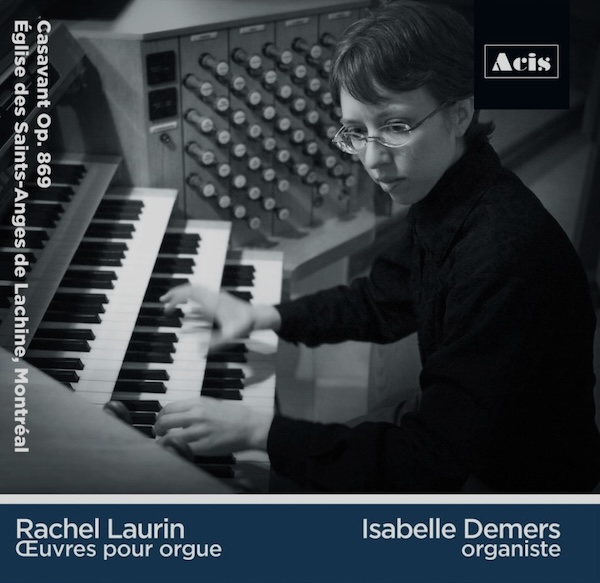
RACHEL LAURIN: ŒUVRES POUR ORGUE・Acis
À l’occasion de son deuxième enregistrement, l’artiste nous propose des œuvres de Rachel Laurin. Autour de trois œuvres majeures : Introduction et Passacaille sur un thème de Raymond Daveluy op. 44, Symphonie no 1 op. 36, et Étude héroïque, op. 38, Isabelle Demers fait preuve d’une excellente technique tant aux claviers qu’au pédalier. Les Douze courtes pièces de l’opus 43, de formes différentes révèlent les couleurs très variées de la vaste palette sonore de l’instrument. Un enregistrement à se procurer absolument.
Mixtures (Canada), Novembre 2011
RACHEL LAURIN: ŒUVRES POUR ORGUE・Acis
Fast-emerging young Canadian organist Isabelle Demers’s second recital cements the promise of last year’s debut with a disc of surprisingly muscular works by her compatriot Rachel Laurin. Owing much to the French symphonic school, the music exults in bright bombast shot through with striking pyrotechnical effects, nowhere more vividly displayed than in the combustible Toccata of the First Organ Symphony, and the boldly realised Étude héroïque. Demers has the music firmly at her fingers, nimbly alert to Laurin’s penchant for grand statement even within compact miniatures such as the Op. 43 Douze courtes pièces.
Choir & Organ (United Kingdom), January/February 2012
RACHEL LAURIN: ŒUVRES POUR ORGUE・Acis
This recording represents Laurin’s estimable compositional skills as realized in various musical forms. It effectively demonstrates that her organ works deserve a place of prominence in the modern repertoire. While Laurin’s music is thoroughly grounded in tonality and consistently bears the stamp of her unique musical expression, she cites numerous influences (…). The first work on the recording, Introduction et Passacaille sur un Thème de Raymond Daveluy, Op. 44, is cast in a Regerian idiom, with hints of Healey Willan’s monumental work in this form. Opening with a brilliant Pedal solo, it demonstrates Laurin’s mastery of variation techniques. Her Douze Courtes Pièces, Op. 43, demonstrate a variety of styles in shorter forms (…) The twelve pieces are separated into two equal groups on this recording, surrounding Laurin’s monumental Symphonie No. 1, Op. 36. Here, the French Symphonic style prevails; the influence of Vierne is particularly strong in the first movement. Throughout the Symphony, Laurin produces many attractive melodies, effective motifs, strong rhythmic gestures, and a fine sense of structural organization.
The concluding Toccata is a riveting tour de force, with figurations that recall Mulet’s Tu es petra. The concluding work is Étude héroïque, Op. 38. As the title suggests, this work calls for the ultimate in technical skill as well as a responsive instrument, all the while being exciting, gratifying music. It bears the spirit of Liszt’s Transcendental Etudes and the Six Études by Jeanne Demessieux. All of these works reflect the highly virtuosic capabilities of their creator, requiring a player of formidable technique to perform them successfully. Laurin has happily found such a performer in Isabelle Demers (…). Her technical brilliance and fluency enable her to render difficult scores with stunning clarity and apparent ease. She wisely keeps her technical bravura subservient to the music itself. Ultimately, she communicates the essence and spirit of the music in a way that, as Laurin has stated, “every composer would love and dream”.
The American Organist (USA), February 2012
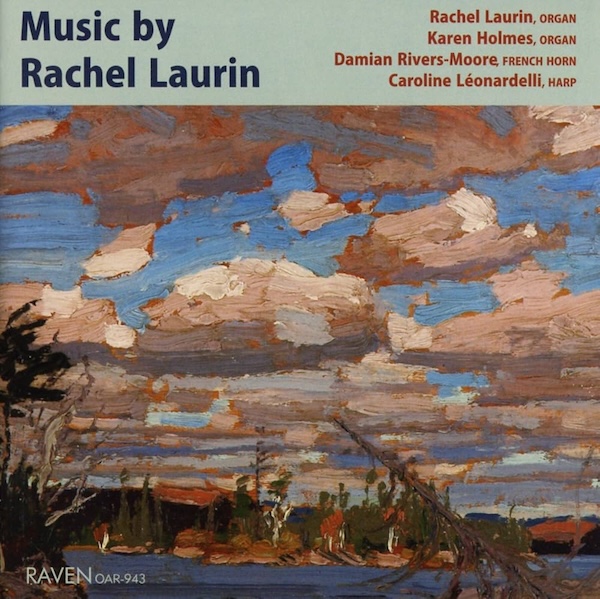
MUSIC BY RACHEL LAURIN・Raven Recordings
One need only listen to the Epilogue, Op. 50, to conclude that Rachel Laurin is not an organist who merely dabbles in composition, but rather a solid composer who also happens to be a fine organist. It’s built around three main ideas led by a turbulent and agitated introduction, a beautifully melodic second subject, and a hymn-like progression of broad chords that expose Laurin’s French Roman Catholic upbringing, that all merge into one heck of a piece of music that would put any organist to the challenge. And at the other end of the spectrum lies the strangely compelling Fantasia for Organ and Harp, Op. 52, in which harpist Caroline Léonardelli and organist Rachel Laurin weave together beautiful sounds from both instruments producing a wide gamut of effects and colors reinforced by the quality of the writing. Each and every piece on this new CD has something different and substantial to say. From the deeply expressive slow movement of the Sonata for Organ and Horn, Op. 60, to the quirky Fuga Comica from the Twelve Short Pieces [Vol. 2] where the joke is on the poor organist who has to learn how to play it, everyone has a character all its own and the stamp of a great composer.
Classical Music Sentinel (Canada), June 2013
MUSIC BY RACHEL LAURIN・Raven Recordings
Rachel Laurin is one of Canada’s brightest stars in the fields of organ, improvisation, and composition. (…) This recording presents repertoire composed between 2007 and 2011 in which the organ acts as soloist as well as collaborator. In the latter, Laurin’s objective is “to use each instrument in its whole range of sonorities and nuances, in an equal dialogue”. This she does brilliantly, exploring in fascinating ways the capabilities of each instrument, sometimes contrasting them, other times melding them together.
The Fantasia for Organ and Harp, Op. 52 was commissioned by the American Guild of Organists National Convention in Washington, D.C., in 2010, and was premiered during that convention. In this work Laurin explores and merges a variety of musical flavors, from medieval to “jazzy”. Its three movements (fast-slow-fast) are cyclic, flowing from one to the next. While combining two of the oldest instruments in music history, this is harmonically one of her more progressive works, often having an improvisatory feel. It has become popular among organ and harp duos.
The Sonata for Organ and Horn was commissioned by Karen Holmes, who gave its premiere with her nephew, French hornist Damian Rivers-Moore at the 2011 Royal Canadian College of Organists National Convention in Hamilton, Ontario. Its three movements are cast in contrasting styles, each unique but maintaining its own integrity. The second movement is particularly alluring, its impressionistic harmonies inspired by Canadian artist Tom Thomson’s painting Bagged Lake. By contrast, the first movement is a sonata-allegro, while the third is a lively fugato-rondo.
The works for solo organ include two award-winning compositions: Epilogue, Op. 50, which won the Marilyn Mason New Organ Composition Competition in 2009, and Prelude and Fugue in F Minor, Op. 45, the 2007 winner of the Holtkamp/AGO Award in Composition. Both works are solidly crafted, with plenty of contrast and musical appeal. The Twelve Short Pieces, Volume 2, vividly demonstrate Laurin’s skill at creating stylistically diverse music, in turn lively, pensive, or dramatic, utilizing various procedures such as fugue, duo, or trio, each piece maintaining its own stylistic integrity. (…) Rachel Laurin is a compelling interpreter of her own music, demonstrating abundant technical and expressive skill. (…) Karen Holmes and Damian Rivers-Moore are excellent performers and collaborators in the Sonata, as is harpist Caroline Léonardelli in the Fantasia. Brimming with attractive, engaging ideas, the music of Rachel Laurin conveys her lively, affable spirit, full of joie de vivre in all of its wonderful stylistic diversity. While sometimes criticized as being “not contemporary enough”, it is this very quality that makes her music so appealing.
The American Organist (USA), November 2013
MUSIC BY RACHEL LAURIN・Raven Recordings
Rachel Laurin n’a plus besoin de présentations. Depuis plusieurs années, cette compositrice produit des œuvres significatives et de haut calibre. Cet enregistrement en est une preuve de plus. Sa Fantaisie pour harpe et orgue ainsi que sa Sonate pour cor et orgue sont des exemples probants. Mais que dire de ses pages pour orgue solo : Épilogue, Prélude et fugue en fa mineur, et ses Pièces brèves. Ces dernières, dont le titre peut laisser croire qu’elles sont faciles, s’adressent, au contraire, à des organistes virtuoses. Cet enregistrement fait appel à la collaboration de Caroline Léonardelli (harpe) ainsi qu’à Damian Rivers-Moore (cor) et Karen Holmes (orgue). Tout simplement un must.
Mixtures (Canada), Novembre 2013
MUSIC BY RACHEL LAURIN・Raven Recordings
I confess that the name of Rachel Laurin was not familiar to me until I received this CD for review. (…) Her music is approachable and enjoyable but by no means bland. It has some of the piquancy of Ravel, the harmonic inventiveness of Holst and the rhythmic vitality of Walton. She is obviously at ease with formal musical structures, sonata form, fugue, and so on. Most of all, one senses that she enjoys composing and her enjoyment is conveyed to the listener in all of these pieces. The Fantasia for Organ and Harp and the Sonata for Organ and Horn demonstrate (…) that the organ can take its place in the wider family of chamber music. (…) The performances and recording are excellent: Rachel Laurin is a virtuoso player as well as a composer with an original and attractive voice. My favorite? The Fantasia for Organ and Harp, which I enjoy more every time I hear it. If Rachel Laurin’s name and music are unfamiliar to you as they were to me, please take my word for it: you will enjoy this CD. Strongly recommended.
Organists’ Review (United Kingdom), December 2013
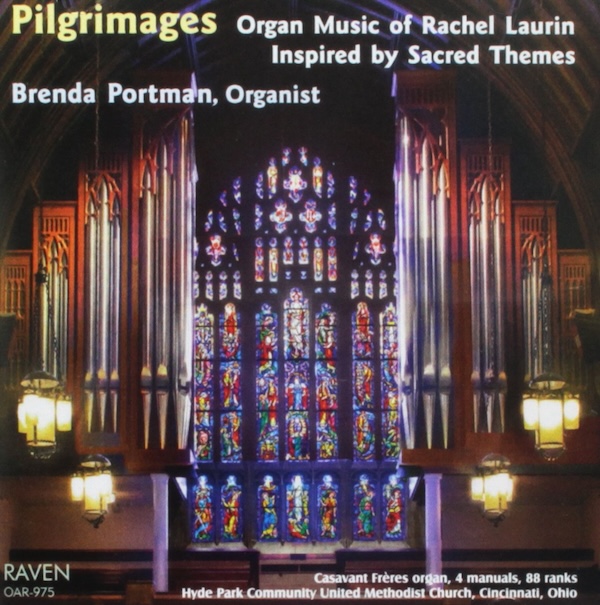
PILGRIMAGES・Raven Recordings
Rachel Laurin is a prolific Canadian composer who specializes in organ and choral music. Her style is described as ‘primarily symphonic, rooted in traditional forms and structures, using a tonal-modal language coloured by chromaticism’, which means, among other things, that it is free from the harsh and dissonant sounds heard all too often in modern organ music. (…) The first piece, Acclamations, is a march for a major ceremony and is constructed on a symphonic scale. The Petite Suite has three contrasting movements, the last a vigorous toccata. The Quatre Pèlerinages has four movements based on Gregorian themes, each representing one of the four regions of Lorraine. The Poème Symphonique is inspired by the text of the hymn for Vespers on the First Sunday in Advent, Creator Alme Siderum and is a set of variations on the principal theme. Beelzebub’s Laugh is a scherzo; Beelzebub is not only another name for the Devil but also the name of a giant fly and this piece combines the laugh with interruptions of the fly.
The Fantasy and Fugue is based on Psalm 47: ‘Nations, clap your hands; shout with joy…’. None of this, of course, describes the music: for that, you must listen for yourself. Brenda Portman is an enthusiastic advocate of Laurin’s music. She is titulaire of this fine instrument: all her performances reveal the quality of the music, the skilful writing and the myriad tone qualities available from this organ. I have enjoyed getting to know this music through repeated listening and I commend it to you. To quote Dr Portman, ‘I am convinced that we are only beginning to see the enormous legacy Rachel Laurin is creating through her compositional art’.
Organists’ Review (United Kingdom), September 2016
PILGRIMAGES・Raven Recordings
Rachel Laurin is a Canadian composer who besides composing hundreds of vocal, choral instrumental, and orchestral works, has written extensively for the organ. (…) The theme of the program is entirely liturgical, and the composer joins the performer in the last work, an organ duet. Portman plays this is well-crafted music with conviction and supplies the virtuosity it often demands.
American Record Guide (USA), September/October 2016
PILGRIMAGES・Raven Recordings
Pilgrimages presents six major works by the Canadian organist/composer Rachel Laurin. The music is well crafted in a kind of New World fusion of musical styles from France, Germany and England. Many of the works are character pieces, especially the Étude-Caprice ‘Beelzebub’s Laugh’ or the Quatre pèlerinages en Lorraine where French sonorities clearly prevail. A particular highlight is the Fantasy and Fugue on the Genevan Psalm 47 for organ duet, in which Portman is joined at the organ by the composer. Portman delivers flawless performances throughout with plenty of flair, bringing to life Laurin’s imaginative and demanding scores.
Choir & Organ (United Kingdom), October 2016
PILGRIMAGES・Raven Recordings
Cet enregistrement présente des œuvres pour orgue inspirées par des thèmes sacrés de Rachel Laurin. (…) Côté musical, l’écriture est typique de Rachel Laurin, des thèmes forts et des développements majestueux commandant des coloris toujours changeants et exigeant une excellente technique. Dans cet enregistrement, les ressources sonores de l’instrument, et principalement les brillantes anches sont admirablement mises à contribution. Superbe! Flamboyant!
Mixtures (Canada), Novembre 2016
PILGRIMAGES・Raven Recordings
(…) One of Canada’s leading composers, she [Rachel Laurin] is house composer at Wayne Leupold Editions and associate composer at the Canadian Music Centre. Her organ works form a substantive segment of the modern repertoire. Her music is strong, assertive, vibrant, personal, well crafted, and appealing. Based in tonality and modality, her harmonies are colorful, adventurous, and well grounded. Thematic materials, often derived, are cleverly assimilated into Laurin’s own style which, she writes, is “not particularly influenced by music of France, Germany, England, or any others, but bears the mark of a North- American craft: a ‘New World’ influence, which offers a synthesis of the ‘Old Europe’ tradition in a personal way”.
The six works on this program are large in scale, symphonic in conception, often descriptive in nature. While not necessarily liturgically oriented, they all focus on ecclesiastical themes. Composed between 1996 and 2013, all were commissioned. Acclamations (…) First performed during the final procession of the Knights of Malta, is appropriately festive and ceremonious. Petite Suite sur un Motet de Gerald Bales is based on Bales’s “Let the Earth Celebrate the Lord”. Each of the three movements, Fantaisie, Cantabile, and Toccatina, explore different aspects of the text with a variety of musical gestures and colors.
Quatre Pèlerinages en Lorraine represents four “departments” of Lorraine, a region in northeastern France (…) Each movement incorporates Gregorian chant or other liturgical melodies upon which Laurin fashions fresh, evocative musical frescos. Poème Symphonique pour le Temps de I’Avent (…) incorporates motives from the Kyrie of Mass XVIII and Conditor alme siderum as found in Dufay’s 15th-century setting. This is a highly dramatic work that evokes “traps of Satan,” the “spotless Victim,” the “impulse of the love of the Savior,” the “great Judge of the final day,” and other elements from the text. Also powerfully dramatic is Etude-Caprice “Beelzebub’s Laugh” for which Paganini’s Caprice Le Rire du Diable (The Devil’s Laugh) served as a springboard for creative ideas, including repeated notes and staccato chromatic descending chords or scales, contrasted with a melodic theme with chromatic accompaniment.
The Fantasy and Fugue on the Genevan Psalm 47 for organ duet was composed following Laurin’s highly successful premiere performance of Jacques Hétu’s Concerto for Organ as part of the inaugural festivities for the opening of the new organ of the Winspear Centre in Edmonton. Laurin’s Fantasy commemorates that organ’s tenth anniversary. In addition to the Psalm theme, Laurin includes a motive reminiscent of the principal theme of Hétu’s Concerto, paying tribute to the composer who had recently died. (…) Brenda Portman performs this demanding program with polish, security, and esprit. (…) Portman is joined by Laurin in the Fantasy. They are a formidable team, executing the tricky rhythms, brisk tempos, and quick changes with panache and unanimity, all the while exuding an infectious joie de vivre. Brenda Portman is a worthy advocate of Rachel Laurin’s music, as performed on a significant instrument that resonates with the music at every level. Hopefully this recording will inspire others to explore this exciting repertoire (and other of Laurin’s works as well), and to enjoy the creative fruits of a fine active perfomer and composer.
The American Organist (USA), November 2016
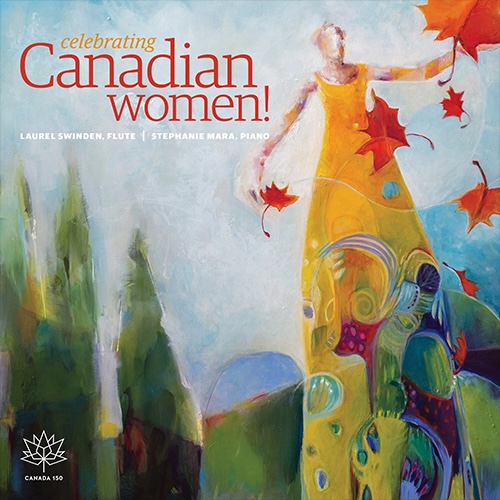
CELEBRATING CANADIAN WOMEN!・Independent
Flutist and University of Guelph flute professor Laurel Swinden and pianist Stephanie Mara have teamed up to record this new CD of music by Canadian women, introducing composers and music new to many of us. Swinden’s playing is consistently first-class — great sound with flawless intonation and articulation. Mara is her equal all the way, playing like a soloist when that is required — and there are at times some devilishly difficult solos for the pianist — and stepping back when needed. The program includes two sonatas, one by Québec composer and organist extraordinaire Rachel Laurin, the other by composer and pianist Heather Schmidt. Both sonatas, oddly enough, have cadenzas which are, in my opinion, some of the best writing in these pieces, and which Swinden plays with great confidence and verve. (…) This CD brings together artistry and artistic leadership. Well done!
The Whole Note (Toronto), August 2017
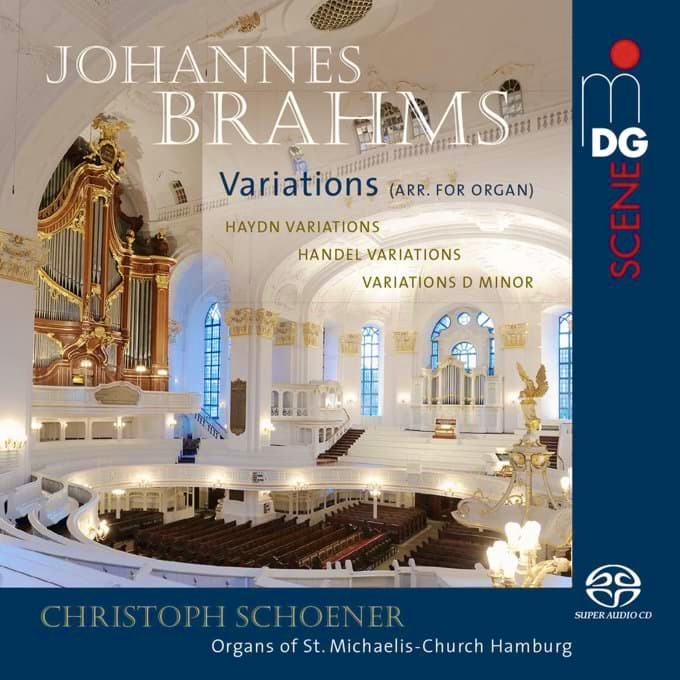
JOHANNES BRAHMS: VARIATIONS・MDG
(…) the opportunities for symphonic transcriptions with stereophonic effects are manifold, and Christoph Schoener goes to town in three Brahms transcriptions, one each from the fields of orchestral, chamber and piano music. Lionel Rogg’s transcription of the ‘St Anthony’ Variations is well known, while Manuel Gera’s free transcription of the second movement from the op. 18 sextet and Rachel Laurin’s arrangement of the Handel variations for piano are much less so. Schoener’s playing is virtuosic: he clearly knows his instruments well and we hear a huge variety of colour — the setzer positively fizzes, while the ghostly Fernwerk adds a little off-stage drama. Reviews like this only mention tuning when infelicities are evident, so allow me to break the mould and say that the tuning here, despite the vast resources and the various locations of the pipes, is fastidious. Bravo.
Choir & Organ (United Kingdom), September/October 2018
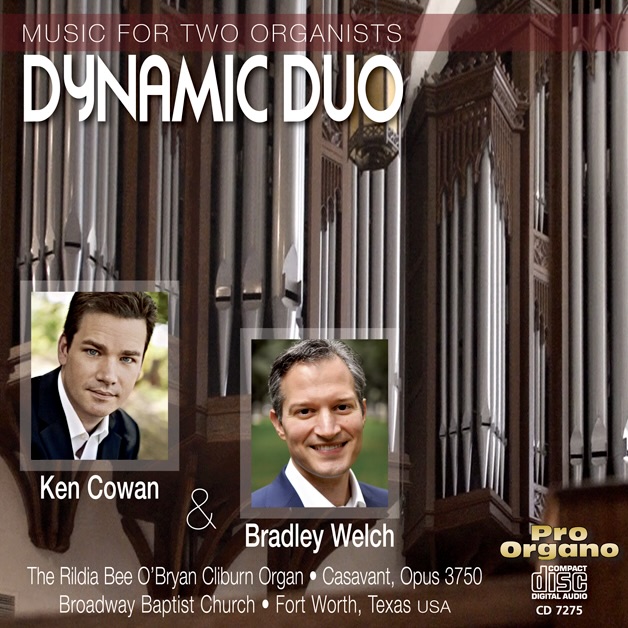
DYNAMIC DUO: MUSIC FOR TWO ORGANISTS・Pro Organ
(…) The music on this recording does full justice to the instrument, as do the two artists who are featured. The performances are taut, thrilling, rhythmically perfect, and thoroughly engaging. (…) The repertoire is partly transcription and partly indigenous to the organ. (…) Original organ works are by John Ireland (Elegiac Romance), Aaron David Miller (Nachtanz and Choral Fantasy on ‘Lobe den Herren’) and Rachel Laurin (Fantasy and Fugue on the Genevan Psalm 47 for Organ Duet, Op. 62). (…) sheer joy seems to live at the heart of this project. For that, not least of everything, I’m grateful, and I recommend this CD enthusiastically.
The American Organist (USA), August 2019
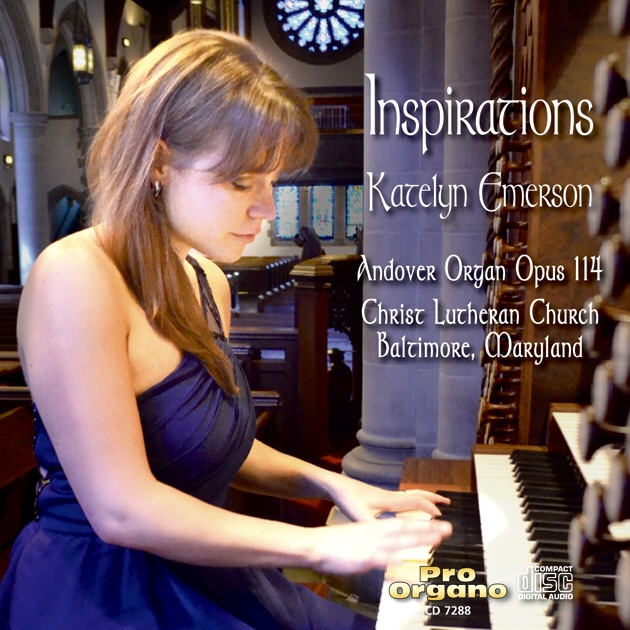
INSPIRATIONS・Pro Organo
Une belle surprise, une artiste de la relève qui nous présente un programme incluant Buxtehude, Bairstow, de Grigny, Langlais, Duruflé, Rheinberger, Parker et une œuvre (Finale, Op. 78) de Rachel Laurin. Avec une technique remarquable, elle attaque un répertoire varié s’échelonnant sur plusieurs siècles. Chaque fois, elle adapte bien ses registrations et les résultats sont fantastiques. (…) D’écoute facile, ce disque est merveilleux!
Mixtures (Canada), Mai 2019
INSPIRATIONS・Pro Organo
This is another top-drawer recording from one of our brightest rising stars. Indeed, “rising star” may no longer apply: Katelyn Emerson is already above the horizon, shining brilliantly. (…) The program opens with a recent work by Rachel Laurin, one of the most important organ composers on the current scene. Finale, Op. 78, was commissioned by the Washington, D.C., AGO Foundation and premiered in 2017. (The title alludes to the cessation of the foundation — this commission was its swan song). Emerson opens the work — and the CD — with an arresting, thrilling plunge directly into this piece. The rush of positive energy is exhilarating. Here, as elsewhere in the program, Emerson presents us with the music itself. There are no gimmicks, no conceptual agendas to deal with. There is just the music, running joyously.
The American Organist (USA), June 2020
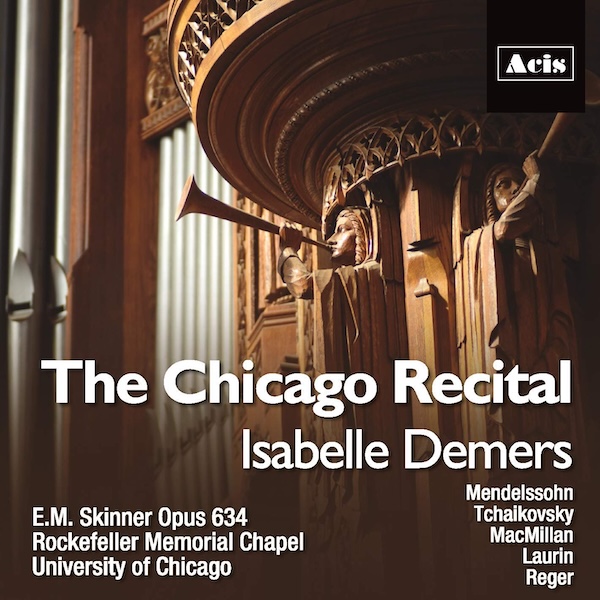
THE CHICAGO RECITAL・Acis
Isabelle Demers is a Québec-born organist who revels in the music she plays and the sounds she can produce by way of pipes and air. Her new recording, ‘The Chicago Recital’, goes to glorious extremes, exploring the colouristic and expressive possibilities of the 1928 Ernest M Skinner organ known as Opus 634 at the University of Chicago’s Rockefeller Memorial Chapel. From the most delicate phrases to massive sonorities that shake ground and ears, the 8565-pipe Skinner comes across as a symphonic wonder, thanks to Demers’s inspired hands, feet and musical acumen. Her choice of repertoire has a lot to do with the recital’s success. (…) She applies the same shining musicality to the remaining works, from Ernest Macmillan’s imperial Cortège académique and Rachel Laurin’s witty Three Short Studies, Op. 68, including two delightful bird musings, to Marcel Dupré’s exuberant Prelude and Fugue in B, Op. 7 No 1. Acis captures these performances in vibrant sound: those who listen through speakers should expect their walls to vibrate when Demers and Skinner conspire with thunderous alacrity.
Gramophone (United Kingdom), November 2020
THE CHICAGO RECITAL・Acis
(…) Cet enregistrement nous permet d’apprécier la vaste palette sonore de cet instrument principalement dans des extraits de deux transcriptions pour orgue d’œuvres orchestrales : ballet de La Belle au bois dormant de Tchaikovsky, et Songe d’une nuit d’été de Mendelssohn. Quant aux trois œuvres pour orgue complétant le disque, on y retrouve, dans une technique à toute épreuve et une virtuosité époustouflante, toute la fougue et l’instinct musical quasi inné de l’interprète. Il faut écouter et réécouter afin de réellement s’imprégner de toute la beauté de cet enregistrement. Un seul mot : génial!
Mixtures (Canada), Novembre 2020
THE CHICAGO RECITAL・Acis
(…) Demers’ geboorteland wordt vertegenwoordigd door de componisten Ernest Macmillan en Rachel Laurin. De Cortège Académique van Macmillan, zijn bekendste werk, doet een beetje denken aan Engelse Pomp and Circumstance. Niet heel diepgaand, maar wel effectief geschreven en plezierig om naar te luisteren. Interessanter is zijn de Three Short Studies van Rachel Laurin, van wier werk Isabelle Demers een enthousiast pleitbezorger is. Na een pedaalmonoloog volgt een impressionistische knipoog naar de vliegende hommel van Rimsky-Korsakov. In het laatste deeltje voert Laurin twee spotlijsters ten tonele. De ene wil de andere een nieuwe melodie aanleren, maar die heeft daar duidelijk minder zin in en verstiert de boel door telkens een heel ander wijsje te fluiten, waarbij we diverse bekende orgelthema’s voorbij horen komen. Muzikale humor op hoog niveau!
Orgel Nieuws (The Netherlands), 7 December 2020
THE CHICAGO RECITAL・Acis
A five-star recording that casts a spell on the listener straight away. The quality, ambience and balance the sound engineers have captured is superb, transporting the listener instantly to the Rockefeller Memorial Chapel. Isabelle Demers’ playing is accomplished and, not only that, the carefully chosen repertoire demonstrated all the fine qualities of this Ernest M. Skinner instrument with its 132 ranks and 8565 pipes. (…) There are numerous highlights, including, for this reviewer, Rachel Laurin’s Three Short Studies, written in 2014. The first one of the set is a pedal solo and the last two showcase Laurin’s love of the animal world. Flight of the Hummingbird is an impressionistic take on Rimsky-Korsakov’s bumblebee whilst Dialogue of the Mockingbirds stems from a rather unusual quality of these birds, namely their ability to learn new songs throughout their lives. In Laurin’s setting, the first bird, played on the trumpet, constantly repeats the initial tune — albeit with some variation — while the second one constantly segues into other tunes, many of them from famous compositions.
Organists’ Review (United Kingdom), December 2020
THE CHICAGO RECITAL・Acis
Isabelle Demers cements her reputation as one of the most expressive organists at work today with a crafted recital delivered with consummate skill. Cleverly designed to show off Chicago University’s vast 8,565 pipe, IV/89 Skinner organ, Ernest Macmillan’s Cortège académique inks in its romantic credentials with robust use of tuba and diapasons as much as the diaphanous reeds in Demers’s own excerpted transcription of Mendelssohn’s A Midsummer Night’s Dream. Rachel Laurin’s Monologue is a quietly thrilling display with a show-stopping climax for solo pedals, Reger’s op.127 Introduction, Passacaglia & Fugue and Dupré’s B major Prelude & Fugue (op.7 no.1) vividly realised in producer Geoffrey Silver’s immediate sound.
Choir & Organ (United Kingdom), January/February 2021
THE CHICAGO RECITAL・Acis
(…) Demers is Professor of Organ at Baylor University and has enjoyed an international concert career. The program contains her own transcriptions of Tchaikovsky and Mendelssohn excerpts, the lively march by Canadian composer Ernest Macmillan, a spirited performance of the Dupre; and three colorful pieces by another Canadian, Rachel Laurin. The centerpiece is Reger’s massive Op. 127, which, at over 30 minutes, is one of the composer’s longest. (…) Demers is a fine player who uses the resources of this organ in imaginative and colorful ways. (…) Excellent notes on the music by the performer, with photos and specification.
American Record Guide (USA), January/February 2021
THE CHICAGO RECITAL・Acis
Recently released, this thrilling new recording from the “diminutive dynamo” doesn’t disappoint. Demers delivers in this varied program what all good performances should: she steps aside and gives voice to those upon whom she stands – in this case, six fabulous composers and one genius organ builder, E.M. Skinner, not to mention the sensitive restoration work (2006-2008) of the Shantz Organ Company. (…) There’s also a puckishness about Rachel Laurin’s Three Short Studies, Op. 68, albeit one of a more sinister variety than Mendelssohn’s. Here, the language of Vierne, Dupré, Langlais (and a couple of others, fleetingly) are synthesized in these humorous little pieces. The organ “speaks French” very well under Demers’s tutelage even if the cheekiness of the music goads it to occasionally talk back to its maître! (…) Once again, Isabelle Demers, humbly toiling in service to both repertoire and instrument, delivers on all she promises and everything we have come to expect from her. Highly recommended.
Organ Canada (Toronto), October 2021
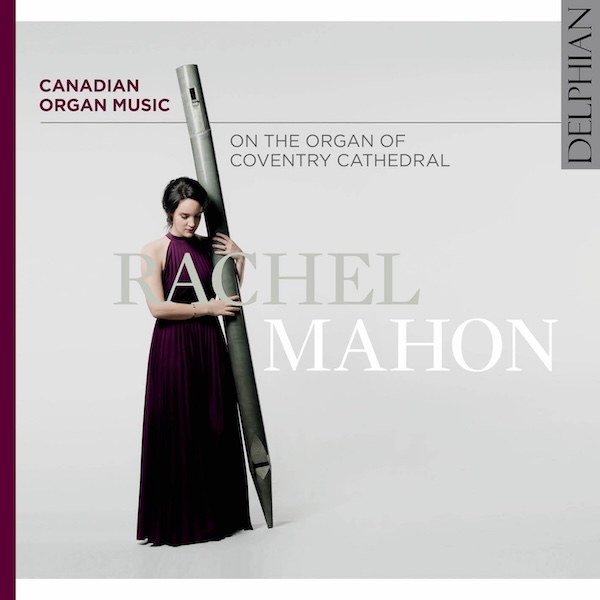
CANADIAN ORGAN MUSIC・Delphian
This is a spectacular debut solo album by Canadian Rachel Mahon, now assistant director of music at Coventry Cathedral. Mahon plays with presence and muscularity to match her fireproof virtuosity, and her time as organ scholar at St Paul’s Cathedral seems to have given her an intuitive sense of how to use large acoustics to dramatic ends. The music is all interesting — Healey Willan’s Introduction, Passacaglia & Fugue is a warhorse, of course, but given a stellar performance, while Gerald Bales’s attractive Petite Suite breathes the same modally tinged air as the music of Flor Peeters. Having been composed as recently as 2008 in a firmly post-Vierne harmonic idiom, it would be easy to write off Rachel Laurin’s First Symphony as mere pastiche. However, the thematic material, tightly controlled structure and volcanic drama comprehensively banish the epithet; this is a very fine work indeed. The repertoire well suits the Coventry organ (largely paid for by Canadian donations), and the recorded sound is both exciting and atmospheric. Tremendous stuff.
Choir & Organ (United Kingdom), March 2020
CANADIAN ORGAN MUSIC・Delphian Records
(…) Rachel Mahon is a Canadian organist who is currently based at Coventry Cathedral as assistant director of music, and combines her knowledge and background in Canadian organ music with her knowledge and understanding of the magnificent Harrison and Harrison instrument in Coventry. (…) Thoroughly rooted in the French tradition is the most recent work on the disc, the Symphony No 1 for organ of 2008 by Rachel Laurin. She takes the Franck/Widor concept of the solo organ symphony and uses its four movements to explore the full colouristic scope of a modern organ. The second movement is a Scherzo thoroughly in the mould of Vierne, while the closing Toccata bears remarkable similarities to that by Marcel Lanquetuit. But this is nevertheless a fine and distinctive work, greatly enhanced by this splendid performance. Rachel Mahon has done Canadian organ music proud in this outstanding recording.
Gramophone (United Kingdom), March 2020
CANADIAN ORGAN MUSIC・Delphian Records
(…) It is with this historical backdrop in mind that organist Rachel Mahon selected her program. The first work, Healey Willan’s monumental Introduction, Passacaglia and Fugue bridges both countries; born in England, Willan later moved to Canada and eventually became known as the “Dean of Canadian composers”. Mahon treats this tripartite tome with the focus it requires, blending rhapsodic virtuosity with careful attention towards the structure of the composition. Gerald Bales’ Petite Suite and Ruth Watson Henderson’s Chromatic Partita are smaller pieces, but no less satisfying to hear on this magnificent organ, while Rachel Laurin’s Symphony No. 1 is simply breathtaking in its immensity and dramatic content. This disc merits repeated listening for numerous reasons, both historical and immediately practical. Mahon, recently appointed the next director of music at Coventry, is a superb performer with a keen ability to craft a satisfying program, and her debut recording is highly recommended.
The Whole Note (Toronto), March 2020
CANADIAN ORGAN MUSIC・Delphian Records
(…) Sinds 2018 is Rachel Mahon assistent-organist van de kathedraal van Coventry. En alsof dat niet genoeg is, ze is er zeer onlangs benoemd tot Director of Music. Dat gaat in op 1 september 2020. (…) Componiste Rachel Laurin leeft en werkt in de Québec, de Franstalige provincie van Canada. Het is ook niet verbazend dat haar werk Franse invloeden vertoont. Haar vierdelige Symphony No 1 for organ (Prelude, Scherzo, Aria en Toccata — elk deel duurt ongeveer zesenhalve minuut) waarmee de cd afsluit, doet denken aan Widor en vooral Vierne, maar ook latere Parijse grootmeesters. De wervelende Toccata is waanzinnig.
Orgel Nieuws (The Netherlands), 8 May 2020
CANADIAN ORGAN MUSIC・Delphian Records
No disc of Canadian organ music would be complete without Healey Willan’s Introduction, Passacaglia and Fugue, and it is fitting that this recording from Coventry Cathedral opens with it. The Canadian organist Rachel Mahon is assistant director of music at Coventry, where as part of the famous post-war construction the organ was paid for largely by Canadian contributions raised by Willan himself. (…) Piquant harmonies in the Symphony No. 1 by Rachel Laurin are handled with light virtuosity before the work ends with a blazing toccata.
BBC Music Magazine (United Kingdom), August 2020
CANADIAN ORGAN MUSIC・Delphian
La cathédrale de Coventry et son orgue ont un rapport spécial avec le Canada puisqu’en 1943, après leur destruction lors de la Deuxième Guerre mondiale, le RCCO s’est engagé à aider à la reconstruction de l’orgue. Les plans de l’instrument ont été finalisés en 1959 et l’instrument a été inauguré en 1962. L’enregistrement comprend deux œuvres majeures : l’Introduction, Passacaglia and Fugue de Healey Willan et la Première Symphonie de Rachel Laurin. Une Suite de Gerald Bales et la Chromatic Partita de Ruth Watson Henderson complètent. Toute une prestation pour cette Torontoise qui occupe maintenant le poste d’assistante directrice musicale de la cathédrale de Coventry. Elle démontre une technique impeccable dans un répertoire très exigeant. À écouter et à réécouter! Absolument magnifique!
Mixtures (Canada), Novembre 2020
CANADIAN ORGAN MUSIC・Delphian Records
In the Winter 2020 issue of Organ Canada, Rachel Mahon described the historic links between the Canadian organ community and Coventry Cathedral. Destroyed by Luftwaffe bombers in 1940, the cathedral was rebuilt in 1962 with an eye-catching modernist building and a pipe organ paid for in large part by donations from members and friends of the Canadian College of Organists, organized by then-president Healey Willan. The Canadian connection makes the Harrison & Harrison organ at Coventry an especially appropriate venue for this recital of all-Canadian repertoire by Mahon, a Toronto native recently appointed as director of music at the cathedral. (…) Last on the program is Rachel Laurin’s First Symphony (2008), a technically assured large-scale work by one of North America’s leading organ composers. Mahon’s performance brings out the work’s indebtedness to the symphonies of Vierne as well as its range of emotions, from the dusky, almost Brucknerian, slow movement to the jubilant finale.
Organ Canada (Toronto), October 2021
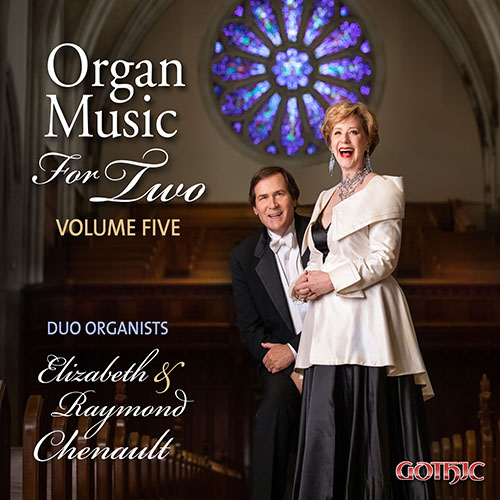
ORGAN MUSIC FOR TWO, VOLUME 5・Gothic
The Chenaults have been performing, commissioning, recording, and publishing music for organ duet since 1978. This is Volume 5 in their perusal of this repertory, and it lives up to the high standards of this series as evidenced by the carefully worked out performances and the quality and variety of the pieces they have commissioned. (…) the program effectively displays all the color possibilities of the instrument, managed with great skill and imagination by the Chenaults (…) Extensive notes on the music, performers, and composers, with photos and specification. A handsome production.
American Record Guide (USA), September/October 2021
ORGAN MUSIC FOR TWO, VOLUME 5・Gothic
The doyens of the organ duo world, the Chenaults have been entertaining audiences for decades, and this fifth album of recent commissions and arrangements contains some real delights. The large 1962 Aeolian-Skinner organ responds well to the grand textures provided by four hands and feet, particularly in the most significant works: Philip Moore’s Triptych and Rachel Laurin’s Fantaisie à deux. Also from the pen of Laurin is an imaginative Cantabile à deux, written in 2020 for the Chenaults and this organ. Various other spiritual, gospel and hymn arrangements fill this charming and well-presented concert album.
Choir & Organ (United Kingdom), October 2021
ORGAN MUSIC FOR TWO, VOLUME 5・Gothic
Grâce à ces artistes surnommés World’s Premiere Duo-Organ Team, le répertoire pour orgue à quatre mains s’est enrichi de 70 compositions qu’ils ont commandées. Ce disque ne fait pas exception puisqu’il présente huit nouvelles œuvres ou adaptations d’œuvres données en première lors d’événements musicaux, et qui font l’objet ici d’un premier enregistrement. (…) Parmi les nouvelles compositions, il faut souligner deux œuvres tout à fait remarquables de Rachel Laurin : Cantabile à deux, Op. 99 et Fantaisie à deux, Op. 88. Ce qui n’enlève rien aux autres œuvres tout aussi intéressantes. Qu’on soit friand d’orgue en solo ou en duo, on sera conquis par cet enregistrement qui est extrêmement intéressant puisqu’il présente une agréable variété d’œuvres magnifiquement interprétées. On sent partout de la joie!
Mixtures (Canada), Novembre 2021
ORGAN MUSIC FOR TWO, VOLUME 5・Gothic
(…) Finally, the Chenaults treat us to two fabulous new works by Rachel Laurin. Hailing from French Canada, Laurin is one of the finest composers of organ (and other) music on the current scene. Cantabile à Deux, Op. 99 is a nine-minute work that contrasts an opening misterioso theme with an “anxious” motive building to full organ, gradually returning to the peacefulness of the opening. The eleven-minute Fantaisie à Deux, Op. 88, likewise contains a variety of contrasting musical elements, including fanfare (an opportunity to show off the organ’s big reeds), toccata, scherzando, moto perpetuo, and aria. Through it all, the music displays Laurin’s creative genius, clear formal design, and superb musical craftsmanship. The Fantaisie ends in a blaze of glory.
The American Organist (USA), January 2022
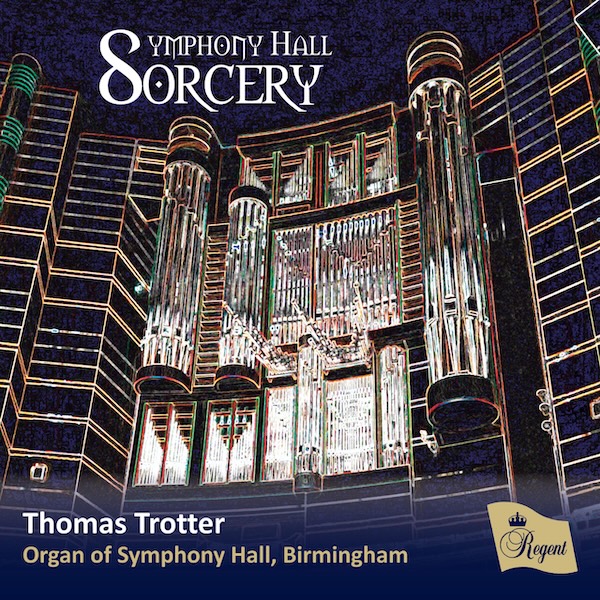
SYMPHONY HALL SORCERY・Regent Records
Most readers will be aware of the brilliance of Thomas Trotter, but some might not appreciate his versatility as both a performer and arranger. This disc reveals the dual aspects of his talent. (…) The influence of jazz is most significant within this compilation. It is certainly revealed in a rather cheeky piece, Mozart Changes by the Hungarian composer, Zsolt Gárdonyi, and also the Sweelinck Variations by the Canadian organist and composer Rachel Laurin, who was commissioned by Trotter to compose a piece for his 800th recital as Birmingham City Organist in February 2020.
Cathedral Music (United Kingdom), February 2022
SYMPHONY HALL SORCERY・Regent Records
(…) Former Organ Scholar at King’s College, Thomas Trotter was appointed Birmingham City Organist back in 1983, and has released many fine recordings on reputable labels such as Chandos, Hyperion, Decca, Regent and King’s College. As exemplified in this new recording, his choice of registration, not only for any given piece but for individual passages within these pieces to bring out their musical character, is impeccable. (…) He also very well brings out all of the subtle differences as well as the Renaissance splendour captured within the Sweelinck Variations by Canadian composer and organist Rachel Laurin. A work commissioned by Trotter himself.
Classical Music Sentinel (Canada), February 2022
SYMPHONY HALL SORCERY・Regent Records
Apart from his association with St Margaret’s, Westminster — the parliament church — Thomas Trotter’s domestic base for nigh on four decades has been Birmingham: primarily at the town hall, having succeeded George Thalben-Ball in 1983, but also as a frequent guest artist at Symphony Hall. (…) All else comes from the original organ repertoire and includes a commission from the French-Canadian organist Rachel Laurin to mark Thomas Trotter’s 800th recital as Birmingham City Organist in 2020. Her Sweelinck Variations (…) via 10 variations, we are treated to yet another virtuosic display which offers proof of why Laurin’s music is gaining popularity in UK recitals and fits so comfortably as a progression into what has gone before (there is an absolute superb YouTube recording splicing works by Laurin and Duruflé, made by Trotter in the wonderful acoustic of King’s College, Cambridge).
Organists’ Review (United Kingdom), May 2022
SYMPHONY HALL SORCERY・Regent Records
Sorcery may be the name Thomas Trotter has given to his latest recital disc made on the IV/85 Klais organ of Symphony Hall, Birmingham, which he designed, but there is no sleight of hand or smoke and mirrors in the delivery of this eclectic and high-energy, dance-inspired programme. (…) The concluding work in the programme — Canadian composer Rachel Laurin’s Sweelinck Variations op.96 — is another wild ride commissioned for Trotter’s 800th recital as Birmingham City Organist, in February 2020. The ten variations of this substantial work, each one arresting enough its own right, are kaleidoscopic in their range and ambition, worthy to stand alongside Dupré’s Noël Variations as a pinnacle of musical invention for the organ: listen out for the terrifying pedal solo and concluding fugue.
Choir & Organ (United Kingdom), May 2022
SYMPHONY HALL SORCERY・Regent Records
Another fine recording by the English organist Thomas Trotter. (…) I have not been a fan of Rachel Laurin’s music in the past (Sept/Oct 2016) but found these variations on Sweelinck’s Ballo del Granduca, commissioned by Trotter in 2020 to celebrate his 800th recital as Birmingham City Organist, to be at once humorous, exuberant, meditative, and engaging, culminating in a spectacular pedal solo and grand fugal finale. Notes on the music with specification.
American Record Guide (USA), May/June 2022
SYMPHONY HALL SORCERY・Regent Records
Thomas Trotter is recognized as one of the world’s finest organists. He has performed with many leading orchestras and conductors, and as a solo recitalist in numerous esteemed venues. Hailed for his breathtaking virtuosity, he is also respected for his superb musicianship. (…) The final work was commissioned by Trotter for his 800th recital as Birmingham city organist, in February 2020. While he has commissioned many works from non-organist composers, for this occasion he selected Rachel Laurin, herself a superb organist, who fully met the challenge in her Sweelinck Variations. (…) Following a simple rendering of the theme on one of the Klais’s charming reed stops, ten variations, in the words of programme annotator David Grammie, “embrace a kaleidoscopic variety of texture, mood and colour, with moments that are light, humourous, meditative, expressive, impressionistic, exuberant, and dramatic”. Thoroughly exploring and testing numerous aspects of the organ’s tonal colors and mechanical response — and the performer’s technical and stylistic acumen — the work ends with a daredevil pedal solo replete with fast runs and full, quickly shifting chords, followed by a Regerian fugal finale.
Laurin is one of Canada’s most highly respected composers, and her organ music is often performed by North American organists in recitals across the pond. While many of her other works — including the Étude héroïque, which prompted Trotter’s commission — have earned a place of high importance in the modern repertoire, these variations will certainly come to be judged as some of her finest music to date. (…) This recording is a stunning document of both player and instrument that should be in every organ lover’s collection.
The American Organist (USA), August 2022
SYMPHONY HALL SORCERY・Regent Records
(…) En plus de L’Apprenti sorcier de Paul Dukas et de quelques danses tantôt anciennes, tantôt modernes, on y retrouve le premier mouvement de la 5e symphonie pour orgue de Charles-Marie Widor, une Fantaisie de Camille Saint-Saëns, mais surtout les Variations sur un thème de Sweelinck, une œuvre de Rachel Laurin qui a été commandée par l’interprète, en 2020, afin de souligner son 800e récital en 40 ans comme organiste titulaire de cet instrument. Technique impeccable, interprétation vivante, et excellente prise de son font de ce disque un incontournable.
Mixtures (Canada), Novembre 2022
SYMPHONY HALL SORCERY・Regent Records
Rachel Laurin’s sophisticated Sweelinck Variations celebrate Thomas Trotter’s 800th recital as Birmingham City Organist. The piece was premiered shortly before lockdown in February 2020. Laurin’s theme comes from Ballo del Granduca for harpsichord or organ by Jan Pieterszoon Sweelinck (1562-1621). The piece may have been by his pupil Samuel Scheidt. In any case, the actual melody was composed in Italy in 1589 by a certain Emilio di Cavalieri. No matter. The Variations explore a vast range of musical “texture mood and colour”. It has moments “that are light, humorous, meditative, expressive, impressionistic, exuberant, and dramatic”. The work concludes with a massive fugue. (…) Thomas Trotter has devised a splendidly diverse programme. I have noted above the impressive and creative registrations that he has chosen for these pieces. Equally extraordinary is his technique and his irrepressible enthusiasm apparent in every bar that he plays.
MusicWeb International (United Kingdom), August 2023
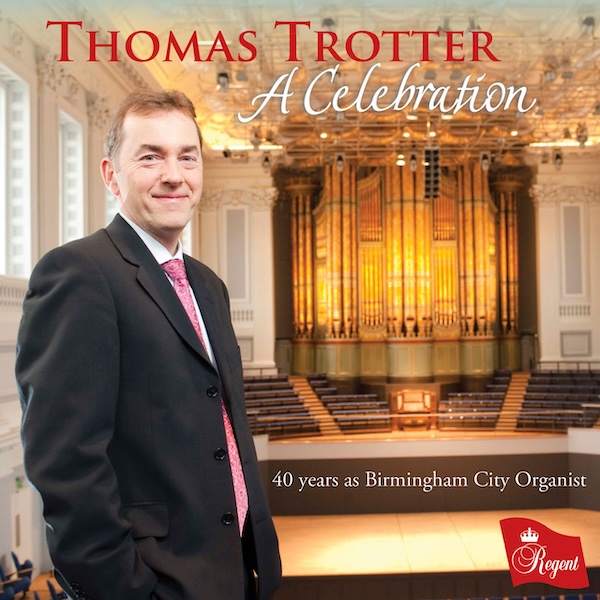
THOMAS TROTTER: A CELEBRATION・Regent Records
(…) It’s nice to see someone avoiding the usual and hackneyed showstoppers typically found on collections like this. From the delicately ‘minimalist’ Walking Song by Irish composer Kevin Volans, to the regal pomp of Mendelssohn’s Overture to St Paul. From the quirky Caribbean Dance by Madeleine Dring to the technically demanding and powerfully rousing Étude héroïque by Canadian organist and composer Rachel Laurin, it’s all here and performed with great panache by Thomas Trotter who is celebrating 40 years as Birmingham City Organist.
Classical Music Sentinel (Canada), October 2023
THOMAS TROTTER: A CELEBRATION・Regent Records
(…) Now for a second dramatic unveiling: the same night, Trotter was able to introduce and sign a new disc from the brilliant Regent Records, issued to celebrate his forty years: ‘Thomas Trotter — A Celebration’ [REGCD 584]. (…) Valse mignonne is by no means Siegfried Karg-Elert’s most effective piece, but it’s a noble attempt at being light-hearted by this eminent German composer (1877-1933). Trotter can appear at his best when he pulls out the Tremulant stop. Somewhere between emotive and sleazy, he is able to use it to make things sound like a cinema organ. That’s the fun bit. Better perhaps, Québec-born composer Rachel Laurin, who died aged sixty-two only two months ago. One wonders if she was able to hear Trotter’s pirouetting performance of her Étude héroïque on this disc, but he’s played it several times before, so maybe she got a glimpse then. There’s a lot of punch in this scintillating work, described in the record’s sleeve notes as ‘exhilarating’; and at eight minutes long on this definitive Regent recording it’s very good news, as it holds you for every second — certainly in Trotter’s brilliantly exciting performance here. Laurin’s striking fifteen-minute Sweelinck Variations — based on the celebrated Dutch composer — form the climax to another Trotter disc, REGCD 566 — as usual, finely recorded.
Classical Music Daily (United Kingdom), 18 October 2023
THOMAS TROTTER: A CELEBRATION・Regent Records
(…) The recital opens with a compelling performance of Parry’s Fantasia & Fugue in G, stops off midway for Healey Willan’s masterpiece — Introduction, Passacaglia & Fugue — and ends with Étude héroïque, originally a competition test piece and a timely tribute to the enormous talent of Canadian organist-composer Rachel Laurin, who died in 2023.
Choir & Organ (United Kingdom), January/February 2024
THOMAS TROTTER: A CELEBRATION・Regent Records
There have been only seven Birmingham City Organists since the post was created in 1834, and just four in the past century. Thomas Trotter has already exceeded by six years the previous longest incumbent, his predecessor George Thalben-Ball. This CD celebrates not only his musicianship but also the great instrument that graces the city’s Town Hall, the four-manual Hills-Willis first installed in 1834 and restored in 2007. (…) With Wolstenholme’s charming The Question and The Answer, Kevin Volans’s infuriatingly catchy and rather too long Walking Song (inspired, apparently, by the music of the Ba-Benzélé pygmies of Central Africa) and ending with Rachel Laurin’s exhilarating Étude héroïque, this expertly recorded recital is a fitting tribute to Britain’s greatest living organist.
Gramophone (United Kingdom), January 2024
THOMAS TROTTER: A CELEBRATION・Regent Records
(…) This recording abounds in the vigor and positive energy that marks Trotter’s playing style. To the boundless energy of youth is added the wisdom of years. The result is a joy. (…) The disc also features the magnificent Introduction, Passacaglia, and Fugue of Healey Willan. He organ is tailor-made for this repertoire, and again, Trotter does it full justice. To comment at length on a performance of this caliber would take either too many words or too few; I will err on the latter side and simply say outstanding. We end with two contrasting pieces: a whimsical Valse mignonne by Sigfrid Karg-Elert (which makes ample use of the Solo Bells) and the formidable Étude héroïque by Rachel Laurin. This final work rounds out the recording with an exercise in far-ranging transcendental difficulty yet accessible tonality. Again: outstanding. This recording is well worth your time and would, I think, be a welcome addition to your collection. Kudos all around.
The American Organist (USA), February 2024
THOMAS TROTTER: A CELEBRATION・Regent Records
This recording celebrates Trotter’s 40 years as the Birmingham City Organist. The position was established in 1834, and soon after, the City Organist began playing weekly recitals on Monday evenings, attracting audiences of 1500 or more. (…) The entertaining program contains pieces that have become favorites on his recitals over the years, including the Bach-inspired Parry, delightful miniatures and transcriptions demonstrating the endless color available on this organ, the impassioned virtuosity of Rachel Laurin’s etude, and a magisterial performance of the Willan, demonstrating the organ’s full symphonic range. Notes on the music and organ, with photos and specification. Another enjoyable recording from this superb organist.
American Record Guide (USA), March/April 2024
THOMAS TROTTER: A CELEBRATION・Regent Records
The ‘Celebration’ marks Thomas Trotter’s fortieth anniversary as City Organist of Birminham, having succeeded Sir George Thalben-Ball in 1983. (…) Trotter concludes with the impressive Étude Héroïque by the gifted Canadian organist Rachel Laurin who died in 2023. This varied programme is yet another example of the breadth of talent and skill of this fine artist.
Cathedral Music (United Kingdom), Spring 2024
MASS OF THE ETERNAL FLAME・Acis
(…) The album closes with the two pieces by Laurin, the first, Dedisti Domine, Op. 85, written for the fiftieth anniversary of her parish in Ottawa, Ontario and in honour of Saint Clement. One of the few choral pieces composed by her, the five-minute motet is performed with consummate grace by the Cathedral Choir with Thomas Marvil at the organ. There are moments that call to mind Fauré’s Requiem in D minor, Op. 48, but Laurin’s wondrous creation doesn’t suffer by the comparison. At the recording’s end, organist Robinson performs her Diptych, Op. 107, and, in fact, it was he who suggested that the two-part piece could be used as Opening and Closing Voluntaries at church or presented as a singular concert piece, obviously the form it takes in this context. The tone of the opening part, “Bucolico”, establishes the work as something of a fantasia as it advances adventurously from one episode to another, the music at one moment pastoral and at another invoking the hymn “How shall I sing that Majesty”. The exuberant second movement, “Con fuoco”, proves a showcase for Robinson’s virtuosity as it progresses through multiple high-velocity sequences and roller coaster-like gestures.
Textura.org (Canada), October 2024
MASS OF THE ETERNAL FLAME・Acis
(…) Music by the Canadian organist and composer Rachel Laurin (1961-2023) completes the disc. I confess both this composer and her music were previously unknown to me. Apparently, she wrote only a few choral pieces. Dedisti Domine [Op. 85] is one of those pieces. It’s sung in Latin by SATB choir with organ accompaniment. The piece is attractively melodious. On this occasion the organ part is played by Thomas Marvel who succeeded Daryl Robinson as Organist of Christ Church Cathedral, Houston in 2023. (…) I assume that Daryl Robinson is at the organ console for Diptych [Op. 107]; that would be logical because Rachel Laurin wrote it for him. At Robinson’s suggestion the work was composed in such a way that it could be performed complete as a recital item or, alternatively, that the two elements could each have a separate function, as opening and closing Voluntaries in a liturgical context. I’ve listened to Diptych as an entity but it’s clear that the two movements will work very well as independent items.
The first piece, Bucolico has, as its title suggests, a pastoral feel to it. For the most part, the music is fairly quiet. The thematic foundation is the hymn ‘How shall I sing that Majesty’. The hymn tune first appears at 0:59 and thereafter Laurin weaves in references to it throughout the music in a very inventive way.
The second piece is marked Con fuoco. Rachel Laurin’s programme note implies that ‘How shall I sing that Majesty’ plays a part here as well, though I have to confess that if I’ve interpreted her note correctly, I don’t find the melody as easy to spot. This movement is an extrovert display piece which calls upon the full resources of the organ; it also requires significant energy and virtuosity from the organist, which is amply supplied here. Diptych is an impressive composition which here receives a very fine performance. The booklet includes a full specification of the organ of The Church of St John the Divine, Houston. The instrument was built by Orgues Létourneau of Québec; it’s the firm’s Opus 97 (…) From the specification it appears to be a mighty instrument. It certainly sounds very handsome on this CD, especially in the Laurin piece. I enjoyed this CD very much. It contains excellent, attractive music and the two highly accomplished choirs acquit themselves very well indeed, as do the various instrumentalists. The recorded sound is excellent.
MusicWeb International (United Kingdom), January 2025
MASS OF THE ETERNAL FLAME・Acis
(…) The disc’s final tracks feature two unique works by beloved Canadian composer Rachel Laurin, who died in 2023. (…) Dedisti Domine, Op. 85 (Motet in Honour of Saint Clement) is one of only a few choral pieces by Laurin. The text is an antiphon from the Mass for St. Clement’s feast day on November 23. The organ part sounds like water without being fast or arpeggiated – it has more of a gentle lapping and lilting quality. Laurin’s writing for choir is so natural and makes one wish there were more example of it. (…) Lastly, the recording features organist Daryl Robinson, for whom Diptych, Op. 107 was written. (…) Robinson suggested making a two-part piece that could be used as opening and closing voluntaries at a church or together as a concert work. Bucolico is a charming piece that is pastoral in nature, as stated by Laurin in the program notes. It is based on the hymn, “How shall I sing that Majesty”, and the humble nature of the text (quoted, but not printed in full in the notes) is depicted admirably. Con fuoco is also well named and is a real showpiece for the incredible talents of Robinson. Laurin wrote that the fiery nature of the piece “…was mainly inspired by the exuberant personality and impressive virtuosity of Daryl Robinson which the composer had many opportunities to admire through online posts”! This work was unpublished at the time of the album’s release. I found the music I can use and will listen to again on this excellent recording, and I enthusiastically recommend it to AAM members.
Journal of the Association of Anglican Musicians (Norwalk, Connecticut), May/June 2025
MASS OF THE ETERNAL FLAME・Acis
(…) The one choral work on the album not composed by Ešenvalds is Dedisti Domine, written by the recently deceased Rachel Laurin (1961–2023) and accompanied by organist Thomas Marvil. The music is pleasing, if not groundbreaking – a surprising inclusion of a lesser-known work. More interesting is Laurin’s Diptych, a two-part composition for organ that concludes the CD. The work is substantial in length (at over twelve minutes), and its second movement (“Con fuoco”) is a satisfying outlet for Robinson’s virtuosity. Ešenvalds’s Mass of the Eternal Flame and the complementary works on this CD are worthy of repeated listening and welcome additions to the choral and organ repertory. This recording is highly recommended.
The American Organist (USA), June 2025
MASS OF THE ETERNAL FLAME・Acis
(…) Three works of Rachel Laurin conclude this compact disc. The first, Dedisti Domine: Motet in Honour of Saint Clement, opus 85, commemorated the fiftieth anniversary of the Paroisse Saint- Clément in Ottawa, Canada, which was Rachel Laurin’s home parish church. This is one of only a handful of choral pieces that Laurin composed. The track features the Christ Church Choir with Thomas Marvil playing the organ. Floating above a sparkling organ part the choir sings in Vaughan Williams-like harmonies, and the soaring sopranos in particular produce an extremely fine performance. Rachel Laurin’s unpublished organ work, Diptych, opus 107, was written in the summer of 2021 and was commissioned by Charlotte Jones in honor of Daryl Robinson, who plays the organ on this album in its premiere recording. The first movement, “Bucolico”, is a pastorale that reminds me somewhat of the prelude from Bach’s Prelude & Fugue in A Major, BWV 536. The second movement, “Con fuoco”, is, as its name suggests, a fiery piece and reminds me in its chordal sequences of some of the works of George Gershwin. It provides an impressive end to the compact disc.
The Diapason (USA), June 2025
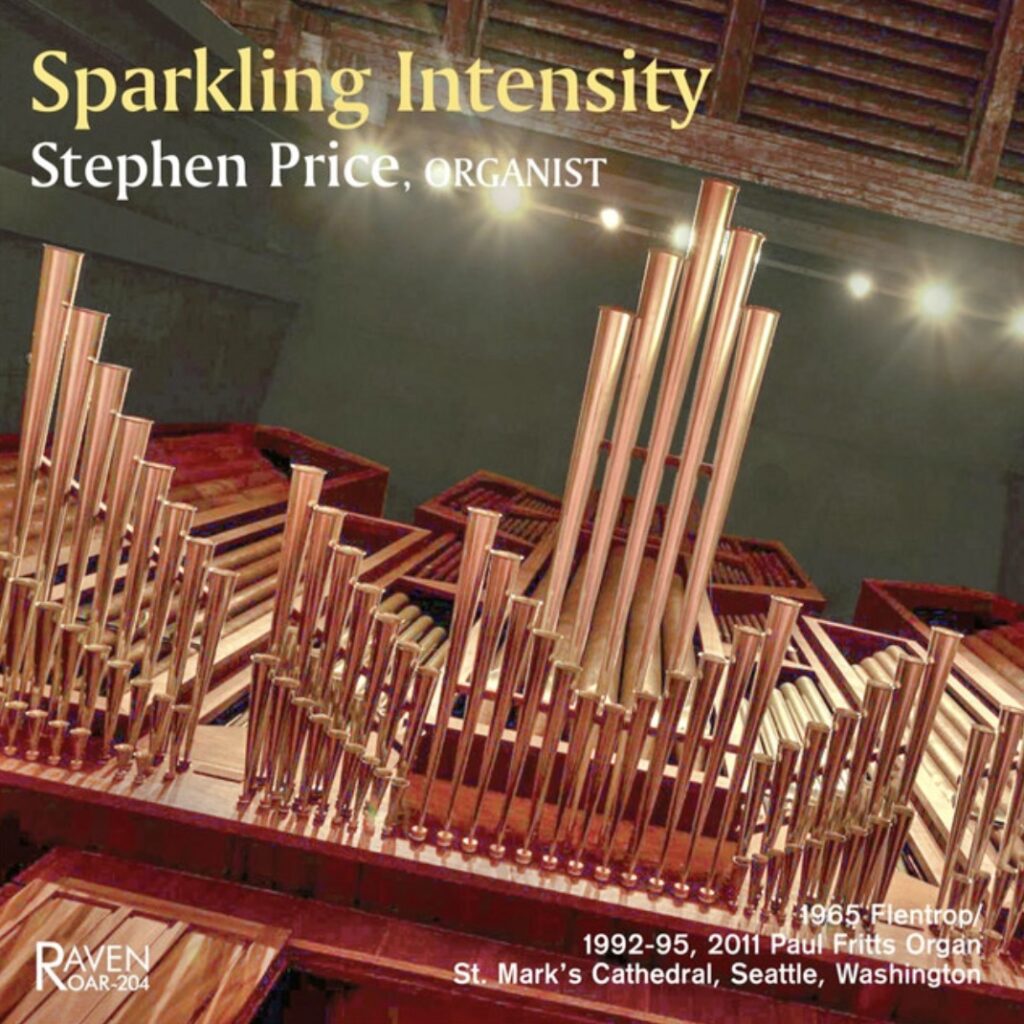
SPARKLING INTENSITY・Raven Recordings
(…) Now when it comes to modern composers producing works equal in stature to music by the great masters of the past, no one quite measures up to Canadian composer and organist Rachel Laurin. Her Three Impressions on “Kingsfold” could very well serve as a masterclass in thematic development. Its inner movement in particular, Berceuse (Lullaby), completely transforms the hymn tune into a lilting, swaying song deploying all of the organ’s gentler registration, guaranteed to send any child to dreamland. And again, organist Stephen Price’s choice of stops is pure perfection.
Classical Music Sentinel (Canada), October 2025
SPARKLING INTENSITY・Raven Recordings
(…) Price is on the faculty at the University of Washington and Director of Music at Plymouth United Church of Christ in Seattle. He plays these mostly unfamiliar pieces in a convincing manner, with technical assurance and a fine ear for color. (…) Informative notes by the performer with specification and photos.
American Record Guide (USA), March/April 2026
SPARKLING INTENSITY・Raven Recordings
Stephen Price’s latest recording for Raven presents a thoughtfully curated program that moves fluently between historical reference, contemporary idiom, and performer-centered creativity. (…) Rachel Laurin’s Three Impressions on Kingsfold, Op. 75, offers a lyrical and stylistically rich meditation on a familiar hymn tune. Influenced by the French Romantic tradition, Laurin’s writing blends harmonic warmth with modern clarity. Price brings sensitivity and poise to these movements, avoiding sentimentality while drawing out the expressive contours of the material. The performance captures both the devotional roots of the tune and the composer’s refined craft.
The American Organist (USA), April 2026
A BLAZE OF SONG・Raven Recordings
The expressive temperatures range from cool to near-red hot on this rich recording by The Choirs of the Episcopal Cathedral of St John in Albuquerque, New Mexico. (…) As Director of Cathedral Music and Organist Maxine Thévenot says in the booklet of the repertoire: ‘The diversity of the music reflects our mission: the program features works by four composers of color, ten female composers, and six male composers, sung in English, Latin, and Spanish’. (…) The solo organ pieces are distinctive, especially as played with seamless authority by Thévenot. (…) Thévenot also revels in Coleridge-Taylor’s lyrical Melody and Rachel Laurin’s hushed Invocation.
Gramophone (United Kingdom), December 2025